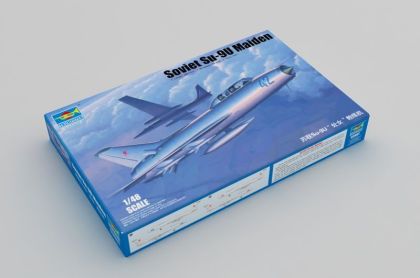
The Su-9's fuselage and tail surfaces resembled those of the Su-7, but unlike the swept wing of that aircraft, the 'Fishpot' used a 53° delta wing with conventional slab tailplanes.
The Su-9 had primitive R1L radar in the shock cone and was armed with four K-5 (AA-1 'Alkali') beam-riding air-to-air missiles. Like all beam-riders, the K-5 was so limited as to be nearly useless for air-to-air combat. Unlike the Su-7 and later Su-15, no Su-9 carried cannon armament, although two fuselage pylons were reserved for the carriage of drop tanks.
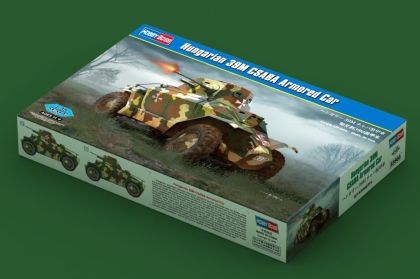
Hungarian expatriate Nicholas Straussler designed several armoured cars for Britainwhile living there between the two world wars. Straussler came to an agreement with the Weiss Manfred factory of Csepel, Budapest to produce vehicles from his designs for use in his home country - the most prominent was the Csaba (named after the son of Attila the Hun) which was designed based on his experience of the Alvis AC2 armoured car.After successful trials in 1939, the Hungarian Army placed an order for 61, and a further order for an additional 40 vehicles was placed in 1940. Of these, twenty were used as actual fighting vehicles, with the remainder serving as armoured command cars and reconnaissance vehicles.The Csaba had a 20mm cannon and an 8mm machine gun fixed on a centrally mounted turret, with 9mm armoured plating. The vehicle was also equipped with a detachable 8mm light machine gun fired through the rear hatch in the anti-aircraft role. The crew could dismou
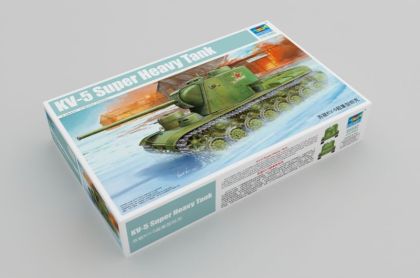
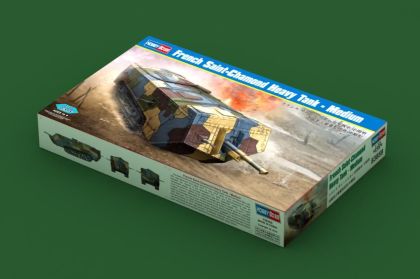
KV-5 (Object 225) - A cancelled project for a super-heavy tank. Armament was to be a 107 mm ZiS-6 gun in a large turret and machine-gun in a small secondary turret. Weight was projected as about 100 tons, and the tank was to have 150-180mm of armor. Project development began in June 1941, however was cancelled due to the Siege of Leningrad, in which all developmental operations at the Kirov Plant were halted. The project fell out of favour from the more advanced heavy tank designs, and no prototype was built.
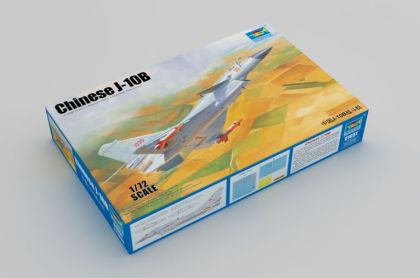
The Chengdu J-10B is the multi-role fighter developed from the J-10A Vigorous Dragon.The prototype took the first flight in December,2008.Now the J-10B has been put into production.
The J-10B made a lot of changes such like the DIS air intake,the new vertical tail antenna and some latest avionics which cann’t be identified from the appearance.
Different from the prototype,the production J-10B updated the avionics,some antennas were added.The first production J-10B are now in test and soon will be put into service.
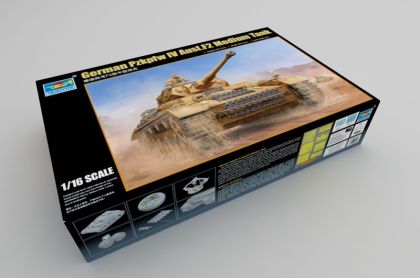
The Panzerkampfwagen IV (Pz.Kpfw. IV) Sd Kfz 161, commonly known as the Panzer IV, was a medium tank developed in Nazi Germany in the late 1930s and used extensively during the Second World War. Its ordnance inventory designation was Sd.Kfz. 161.
Designed as an infantry-support tank, the Panzer IV was not originally intended to engage enemy armour—that function was performed by the lighter Panzer III. However, with the flaws of pre-war doctrine becoming apparent, and in the face of Soviet T-34 tanks, the Panzer IV soon assumed the tank-fighting role of its increasingly obsolete cousin. The most widely manufactured and deployed German tank of the Second World War, the Panzer IV was used as the base for many other fighting vehicles, including the Sturmgeschütz IV tank destroyer, the Wirbelwind self-propelled anti-aircraft weapon, and the Brummbär self-propelled gun, amongst others.
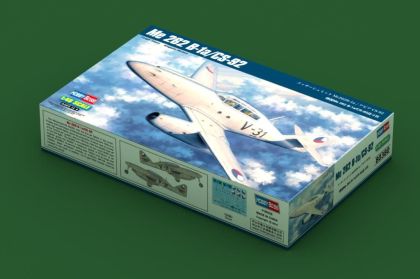
The Messerschmitt Me262 was the first jet fighter in the world. Project work had begun at Messerschmitt as early as April 1939 on a new high-speed fighter plane the propulsion of which was to consist of the “turbine jet” system. And on 18 th July 1942 the Me262 took off on his first flight. The Me262 was powered by two Jumo 004B type engines giving the Me262 amaximum speed of870km/hat an altitude of6000m. Its service ceiling was11400mand its range was 1050km. Basic armament consists of 4 × 30mm MK108 cannon installed in the nose. In addition, 2 × 12 type R4Mrockets could be carried the wings.
S vaším súhlasom môžeme nižšie uvedené informácie užívať na ďalej uvedené účely alebo ich zdieľať s vybranými partnermi. Pre jednotlivé účely (typy spracovania) môžete upraviť svoje nastavenie a svoju voľbu potvrdiť tlačidlom „Uložiť nastavenie“:
Vždy aktívny
Nevyhnutné súbory cookies
Jedná sa o technické súbory, ktoré sú nevyhnutné k správnemu správaniu našich webových stránok a všetkých ich funkcií. Používajú sa okrem iného na ukladanie produktov v nákupnom košíku, zobrazovanie produktov na želanie, ovládanie filtrov, osobného nastavenia a taktiež nastavenie súhlasu s používaním cookies. Pre tieto cookies nie je potrebný Váš súhlas a nie je možné ho ani odstrániť.
Analytické súbory cookies
Počítajú návštevnosť webu a zberom anonymných štatistík umožňujú prevádzkovateľovi lepšie pochopiť svojich návštevníkov a stránky tak neustále vylepšovať.
Marketingové súbory cookies
Zhromažďujú informácie na lepšie prispôsobenie reklamy vašim záujmom, a to na týchto webových stránkach aj mimo nich.
Aby sme vám uľahčili prehliadanie stránok, ponúkli prispôsobený obsah alebo reklamu a mohli anonymne analyzovať návštevnosť, využívame súbory cookies, ktoré zdieľame so svojimi partnermi pre sociálne médiá, inzerciu a analýzu. Ich nastavenie upravíte odkazom "Upraviť nastavenia" a kedykoľvek ho môžete zmeniť v pätičke webu. Podrobnejšie informácie nájdete v našich Zásadách ochrany osobných údajov a používaní súborov cookies.